Journal / fake ids / 15 Fake ID Terms You'll Actually Encounter (And What They Really Mean)
15 Fake ID Terms You'll Actually Encounter (And What They Really Mean)
September 14, 2026
Glossary. Fifteen terms that show up in listings, support chats, bar environments, and customer conversations, each explained in plain language with a practical note on why it matters.
The Terms
1. Scannable — A card that a magnetic stripe or barcode reader can read. In practice, most 21+ bars don't have scanners. The term matters more for clubs that use handheld readers. If a listing says "scannable," it means the magstripe or barcode is present and functional. If it doesn't say anything, it might not be scannable.
2. PVC — The plastic material the card is printed on. PVC is the standard material for ID cards. It's rigid, thin, and durable. A PVC card feels like a credit card. It's not flimsy. It's not paper. It's plastic. The term matters because it tells you the card is a proper ID card, not a laminated photo or a printed card.
3. Hologram — A small, reflective element on the card that shifts color or shows a pattern when tilted. It's a visual security feature. It doesn't store data. It's not scannable. It's just a visual element that makes the card look legitimate. The term matters because it tells you the card has a security element. It's not a blank PVC card. It has a hologram.
4. Magstripe — A dark stripe across the back of the card that stores data magnetically. It's the feature that a magstripe reader reads. Most real IDs have a magstripe. Most fake IDs don't. The term matters because it tells you whether the card has a magstripe or not. If it does, it's scannable by a magstripe reader. If it doesn't, it's not.
5. Barcode — A series of black and white lines on the back of the card that stores data visually. It's the feature that a barcode scanner reads. Most real IDs have a barcode. Most fake IDs don't. The term matters because it tells you whether the card has a barcode or not. If it does, it's scannable by a barcode scanner. If it doesn't, it's not.
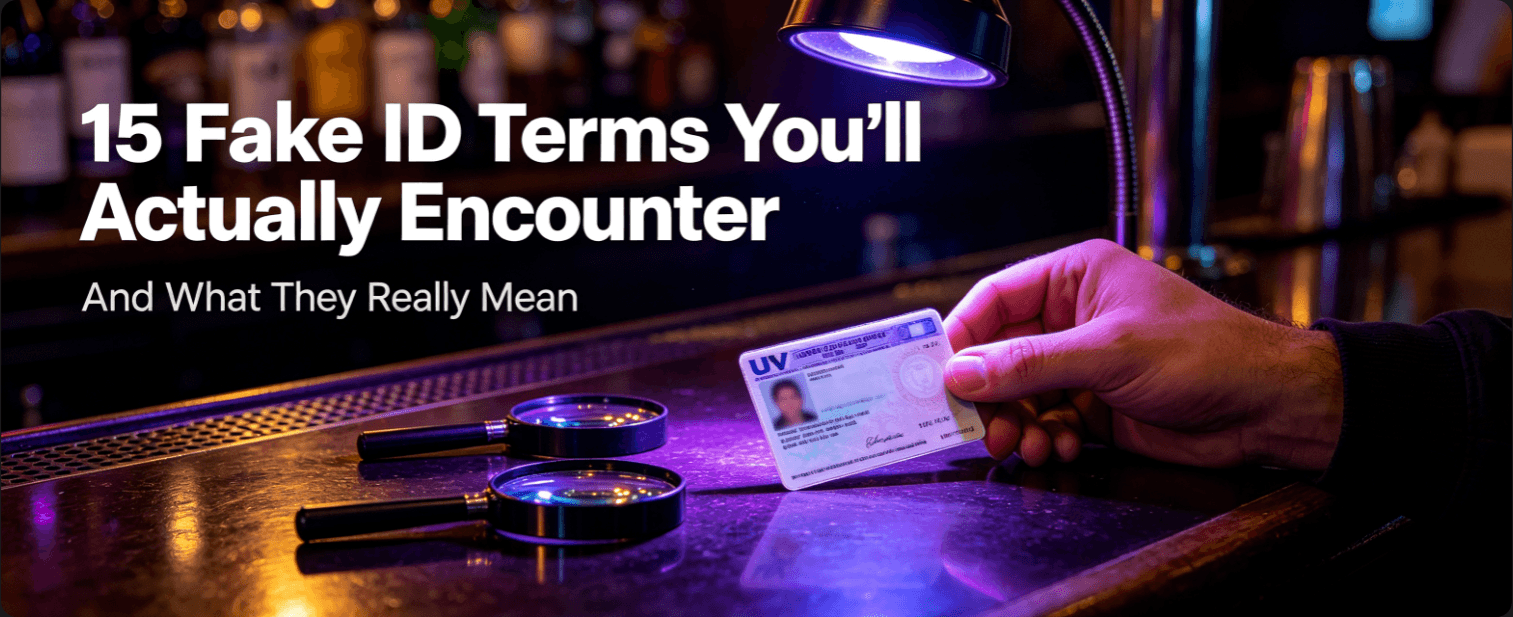
6. UV — A hidden pattern on the card that only shows under ultraviolet light. It's a security feature. It's not visible in normal light. You need a UV light to see it. The term matters because it tells you the card has a hidden security element. It's not just a printed card. It has a UV pattern.
7. Pit — A small, indented area on the card, usually where a hologram or embossed element is. It's a physical feature. It's not printed. It's indented. The term matters because it tells you the card has a physical security element. It's not just a flat, printed card. It has a pit.
8. Kineograph — A small, reflective image embedded in the card, usually a state outline or a security symbol. It's a physical element. It's not printed. It's embedded. The term matters because it tells you the card has an embedded security element. It's not just a printed card. It has a kineograph.
9. Magnetic — A feature on the card that stores data magnetically. It's the magstripe. The term is used interchangeably with "magstripe." It matters because it tells you the card has a magnetic data storage element. It's scannable by a magstripe reader.
10. Optical — A feature on the card that stores data visually, usually a barcode or a QR code. It's scannable by an optical reader. The term matters because it tells you the card has an optical data storage element. It's scannable by an optical scanner.
11. RFID — A radio frequency identification chip embedded in the card that stores data wirelessly. It's scanned by an RFID reader. Most real IDs in some states have an RFID chip. Most fake IDs don't. The term matters because it tells you the card has an RFID chip. It's scannable by an RFID reader.
12. NFC — A near field communication chip embedded in the card that stores data wirelessly. It's scanned by an NFC reader. Some newer state IDs have an NFC chip. Most fake IDs don't. The term matters because it tells you the card has an NFC chip. It's scannable by an NFC reader.
13. QC — Quality control. The process of checking the card for errors before shipping. It's not a feature on the card. It's a process. The term matters because it tells you the card was checked for errors. It's not a random, unverified card. It was QC'd.
14. Rigid — A mailer that keeps the card from bending or warping during shipping. It's not a feature on the card. It's a packaging feature. The term matters because it tells you the card was shipped in a protective mailer. It didn't arrive bent or warped.
15. Your Plug — The IDomni brand tagline. It means the person who gets you what you need. It's not a technical term. It's a brand term. It matters because it tells you who you're buying from. It's not a generic, anonymous seller. It's a specific person with a specific brand.
Get Yours
IDomni — all 48 states, $89-99 card, $20 shipping, 7-14 day delivery. YOUR PLUG.